Certified Pre-Owned vs. Non-Certified Used Car: What’s the Real Difference?
Posted Tuesday, Jun 09, 2026
Shopping for a used car brings a crucial decision: buy a certified pre-owned vehicle or choose a standard used car? Whether you’re exploring certified pre-owned cars from manufacturer-backed CPO programs or considering a non-certified vehicle with a lower price tag, understanding inspection standards, warranty coverage, and vehicle history can save you money and give peace of mind. This guide breaks down the certified vs non-certified used cars debate so you can make a confident buying decision.
What makes a certified pre-owned vehicle different from a regular used vehicle?
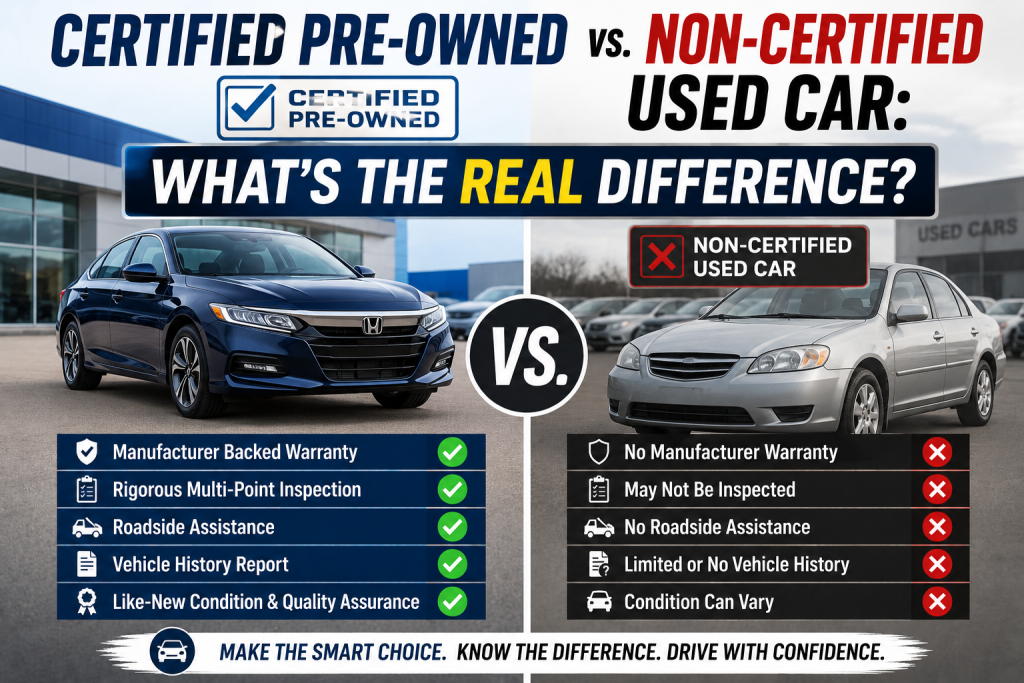
A certified pre-owned vehicle (CPO car) typically goes through a rigorous inspection and certification process set by the manufacturer or dealership. Certified pre-owned programs require specific criteria like mileage limits, vehicle history reports, and a thorough inspection process that verifies the used vehicle is in excellent condition. By contrast, a regularly used car or non-cpo vehicle may not receive this level of vetting.
Certified used cars offer added assurances such as a vehicle history report, manufacturer-backed warranty coverage, and often roadside assistance. Non-certified used cars may still be great buys, especially gently used models, but they lack the standardized checks that CPO vehicles come with, so buyers should inspect and obtain an independent history report.
How rigorous is the inspection process for a certified pre-owned car?
The certification process for CPO vehicles usually involves a rigorous inspection covering hundreds of points—brakes, powertrain, electronics, body condition, and more. This rigorous inspection is why certified pre-owned vehicles often command higher prices: buyers pay for the verification that the car meets factory CPO or dealership standards.
For those buying used, understanding the inspection process is key. Ask the dealership for details and the inspection checklist. A certified pre-owned car will typically include a documented inspection report; a non-certified used car will not, so arrange an independent inspection to avoid surprises.
Does warranty coverage differ between certified pre-owned and non-certified cars?
Yes. Certified pre-owned cars usually include manufacturer-backed or dealer-backed warranty coverage beyond any remaining original warranty—common coverage includes powertrain warranty and sometimes bumper-to-bumper protection. CPO vehicles may also offer extended warranty coverage as part of the certification program, giving extra peace of mind for buying a certified pre-owned vehicle.
Non-certified vehicles rarely come with manufacturer-backed warranties and often rely on limited dealer warranties or the buyer purchasing an extended warranty. When buying a standard used car, consider the cost of potential repairs and whether buying extended warranties makes financial sense compared to paying extra up front for a certified vehicle.
How important is the vehicle history report when comparing certified and non-certified used cars?
A vehicle history report is a must, whether you’re shopping for a CPO vehicle or a traditional used car. Certified pre-owned programs generally provide a detailed vehicle history report showing past accidents, service records, and title status. This transparency is a key reason many buyers choose certified used cars over non-certified cars.
For a non-certified used car, obtain a vehicle history report independently and verify maintenance records. Important checks include odometer readings, previous damage, and whether the car is a salvage title. This due diligence helps reduce risk when buying used, especially with non-CPO used cars that aren’t backed by a certification program.
Are certified pre-owned vehicles always worth the premium price?
CPO vehicles are typically priced higher than comparable non-certified used cars because they include certification, inspection, warranty coverage, and extras like roadside assistance. For many buyers, the premium is worth the peace of mind and lower risk of unexpected repairs. Certified pre-owned cars offer a balance between new and regular used vehicles for those who want additional protection.
That said, buying a standard used car can save money up front. If the non-certified vehicle has a clean vehicle history and passes an independent inspection, it may be a better value for budget-conscious shoppers. Consider mileage, the car’s make (for example, Toyota certified programs are known for strict standards), and expected ownership duration when deciding whether to buy a CPO or a non-certified vehicle.
What additional benefits do certified used cars offer, like roadside assistance?
Many certified pre-owned programs include perks beyond warranty coverage, such as roadside assistance, trip interruption protection, and special financing rates. These customer-friendly benefits enhance the ownership experience and reduce stress when buying a certified pre-owned car.
A non-certified used car rarely includes these extras. Buyers may need to purchase separate roadside assistance or extended warranty coverage. If dependable after-sales support matters to you, a certified vehicle or a CPO program with included services may be the smarter choice.
How does mileage affect the choice between certified and non-certified vehicles?
Mileage is a crucial factor in both certified pre-owned and non-certified cars. Many certification programs set maximum mileage limits to ensure the CPO vehicle still has many years of reliable use ahead. Lower mileage often makes a car more eligible for certification and may justify a higher price for certified pre-owned vehicles.
A non-CPO used car can have high mileage but still be mechanically sound—especially with a documented service history. When buying used, evaluate how mileage impacts expected maintenance and warranty options; a certified pre-owned car with lower mileage and warranty coverage can provide extra reassurance for long-term ownership.
Can you buy a certified pre-owned vehicle from any dealership or only manufacturer-backed ones?
Certified pre-owned programs are often manufacturer-backed (factory cpo cars), but some franchised dealerships and independent used car dealerships also offer their own certification programs. Manufacturer-backed CPO vehicles tend to carry the most credible warranties and rigorous inspection standards, while dealer-certified programs vary in strictness.
When buying a CPO vehicle, confirm whether it’s a factory cpo car or a dealership’s certification. Manufacturer-backed CPO typically includes standardized inspection, vehicle history verification, and extended warranty coverage. Independent dealer-certified options can still be valuable, but require careful review of the certification details.
How do different makes (like Toyota certified programs) compare in certification standards?
Different manufacturers set different certification standards. For example, Toyota certified pre-owned vehicles often follow strict criteria for mileage, age, and inspection items, offering strong manufacturer-backed warranties and a reputation for reliability. Other brands may have varying levels of rigor in their CPO programs.
Research brand-specific certification programs when shopping for a certified used car. Compare inspection checklists, warranty terms, and included services. This helps you understand which certified pre-owned vehicles offer the best value and meet your expectations for quality and coverage.
What should you inspect or verify when buying a non-certified used car?
When buying a non-certified vehicle, perform a thorough inspection and insist on documentation. Key steps include obtaining a vehicle history report, scheduling an independent mechanic inspection, and verifying maintenance records. Check for major wear, previous accident repairs, and title issues to avoid costly surprises.
Consider these checklist items when buying a standard used car:
- Review a vehicle history report, such as Carfax or an equivalent service.
- Arrange for a trusted mechanic to perform a pre-purchase inspection.
- Inspect the vehicle for evidence of proper care, regular maintenance, and overall good condition.
- Negotiate price, accounting for potential repairs or extended warranties.
How should buyers decide between buying a certified pre-owned vs non-certified used car?
Deciding between certified pre-owned and non-certified depends on your budget, risk tolerance, and how long you plan to keep the vehicle. If peace of mind, warranty coverage, and included benefits like roadside assistance are top priorities, buying a CPO vehicle makes sense. If you want the lowest possible price and are comfortable arranging inspections and potential repairs, a non-certified used car can be a wise choice.
Ask yourself:
- How important is manufacturer-backed warranty coverage?
- Are you comfortable paying a premium for inspection and certification?
- Will you rely on included services like roadside assistance or extended warranties?
- Answering these will help determine whether to buy a certified pre-owned vehicle or a non-CPO used car.
Summary: Key takeaways when comparing certified pre-owned and non-certified used cars
- Certified pre-owned vehicles offer a rigorous inspection, certification process, and manufacturer-backed warranty coverage that many buyers value.
- Non-certified used cars can save money up front, but require independent inspections and careful review of the vehicle history report.
- Certification often includes perks like roadside assistance and extended warranty coverage for extra peace of mind.
- Mileage, inspection reports, and vehicle history are critical factors in both certified and non-certified purchases.
- Manufacturer-backed CPO programs (e.g., Toyota certified) tend to have stricter standards than dealer-certified or non-CPO options.
For buyers researching pre-owned vehicles, balancing cost versus assurance is the core of the certified vs non-certified decision. Whether you want the reassurance of a certified pre-owned car or prefer the lower price of a non-certified used vehicle, make sure to inspect, get a vehicle history report, and understand warranty options. If you’re shopping locally, consider visiting HS Cars Company Inc, a Used Car Dealer in Chula Vista, CA, where certified pre-owned, non-certified, inspection, warranty coverage, peace of mind, vehicle history, used models, roadside assistance, and used car dealership expertise can help you find the right CPO vehicle or non-CPO used car for your needs.