Used car vs new car in 2026: Does buying a used vehicle make more financial sense?
Posted Friday, May 15, 2026
Deciding whether to buy a new or used car in 2026 is one of the most important financial choices many car buyers face. With shifting used car prices, new car incentives, and evolving financing options, understanding the true costs — from purchase price to depreciation and car loan impacts — helps you determine which option offers better value. This guide breaks down the most relevant factors for buyers researching the car market in 2026.
Is a used car cheaper than a new car in 2026?
In 2026, average used car price trends still show that buying a used car typically costs less upfront than a new car. The purchase price for late-model used vehicles often sits substantially below the new car price because new cars lose a large portion of their value in the first year. For car shoppers focused on minimizing the initial outlay or lowering monthly payments, used cars vs new cars often tilt toward used models as the better value.
However, a lower purchase price is only part of the equation. Compare new and used by including sales tax, registration, and any fees rolled into a used car loan versus a new car loan. A used car buyer can often secure a better overall deal if they shop for certified pre-owned options, inspect vehicle history reports, and choose models known for longevity.
How much does depreciation affect the new versus used decision?
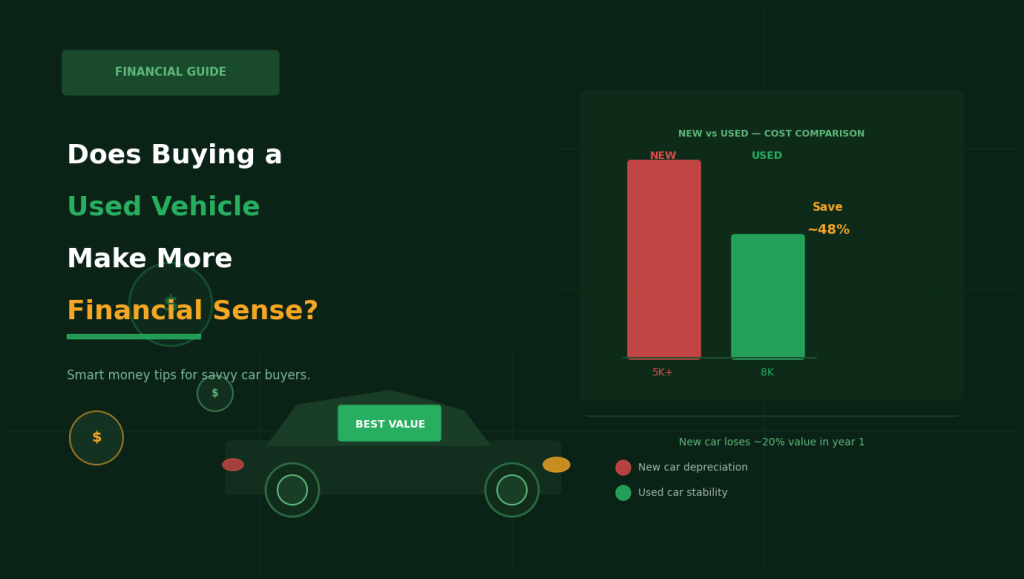
Depreciation is a major factor when comparing new and used. New cars typically experience the steepest drop in value in the first year — the value in the first year can decline by 20% or more, which means new car buyers absorb the largest portion of depreciation. In contrast, used cars have already taken that initial hit, so used car prices tend to stabilize, giving used car buyers less loss in value over a comparable ownership period.
To decide whether it makes financial sense to buy new or used, calculate expected depreciation for the model you want, and factor that into total ownership costs. For many car buyers, especially those who plan to resell or trade within a few years, a late-model used vehicle often represents better value than a new model that will lose significant value immediately.
Will financing a new car or a used car loan be more expensive?
Car loans differ between new and used vehicles. New car loans usually come with lower interest rates and attractive manufacturer incentives or rebates, which can lower monthly payments despite a higher new car price. On the other hand, used car loans often carry higher rates and shorter terms, increasing monthly costs in some cases. Comparing financing offers from banks, credit unions, and dealership financing is crucial for the car buyer.
Shop for the best used car loan and get pre-approved if possible. For those deciding whether to buy new or used, a lower interest used car loan plus a lower purchase price often results in a lower total cost of ownership — but only if the loan term and interest rate are competitive. Consider total interest paid, not just the monthly payment, when comparing new car loan vs used car loan options.
Are maintenance and repair costs higher for used vs new vehicles?
Maintenance and repair expectations influence whether it’s better to buy new or used. New cars often come with manufacturer warranties and complimentary maintenance for a limited time, meaning new car owners typically face fewer out-of-pocket repair costs early in ownership. Used vehicles, especially those without extended warranties, may need immediate maintenance or repairs depending on mileage and condition.
To mitigate risk when buying used, consider certified pre-owned models, obtain a vehicle history report, and budget for potential repair costs. Many used car buyers save money overall despite higher maintenance risk because the initial savings on purchase price and lower depreciation outweigh occasional repairs.
How do insurance costs compare for new and used cars?
Insurance premiums are another key element in the compare new and used equation. New vehicles often cost more to insure because their replacement value is higher and they may require comprehensive coverage or higher liability limits. Used car insurance premiums are typically lower, which reduces recurring ownership expenses for many car shoppers.
Get insurance quotes for the specific new model and used years you’re considering. For car buyers aiming to optimize monthly cost, the combination of a lower used car price and reduced insurance can make buying a used car in 2026 a smarter financial move.
Should I prioritize certified pre-owned or late-model used vehicles?
Choosing between a basic used car and a certified pre-owned (CPO) or late-model used vehicle comes down to risk tolerance and budget. CPO programs often include extended warranties, detailed inspections, and additional benefits that close the value gap between used and new. For many buyers wanting the savings of a used car with more certainty, CPO options are an excellent compromise.
Late-model used vehicles combine lower depreciation with modern features and safety technology found in new cars. If your goal is to buy a used car that offers reliability and strong resale value, search for late-model used vehicles with a clear vehicle history report and reasonable mileage.
How do incentives and car deals affect buying new in 2026?
Manufacturer incentives and dealer promotions can narrow the gap between new and used. New car buyers in 2026 may find special financing rates, cashback offers, or seasonal deals that make buying a new vehicle more attractive. Compare these incentives to current used car prices to evaluate whether a new car purchase becomes financially viable for your situation.
Car shoppers should calculate the net cost after incentives, factoring in trade-in value and potential tax advantages. For many buyers, incentives can tip the scales toward a new car — especially if the new car payment fits comfortably in the budget and long-term ownership benefits matter more than initial savings.
What role does resale value play in the decision between new and used?
Resale value matters because it affects the total cost of ownership and long-term financial returns. New cars with strong brand reputation and high residual values will retain more of their worth, whereas many new models still lose considerable value versus cost. Used car buyers benefit from the fact that much depreciation has already occurred, so resale value declines are smaller on a percentage basis.
Research models with historically strong resale value when comparing new and used. For car buyers focused on minimizing depreciation loss, choosing a used model with proven durability and high demand often makes more financial sense than purchasing a new vehicle with steep early depreciation.
How does the current car market in 2026 influence the new vs used decision?
Market conditions in 2026 — including supply of new inventory, used car prices, and interest rates — directly impact whether it's smarter to buy new or used. If new inventory is plentiful and incentives are strong, new cars may be more accessible. Conversely, if used car prices remain high due to demand, the typical cost advantages of buying used may shrink.
Staying informed about local car dealers, current car deals, and average used car price trends helps car buyers make the best choice. Whether buying a used vehicle or choosing a new model, monitor the market and negotiate both purchase price and financing terms to secure the best overall value.
Which option provides the best overall financial sense for short-term vs long-term ownership?
For short-term ownership (2–4 years), buying a late-model used vehicle usually makes financial sense because you avoid the steep early depreciation that new cars experience. For long-term owners (5+ years), buying new can make sense if the new car offers lower maintenance initially and better financing, and if the buyer values having the latest safety and technology features.
Consider your ownership horizon and budget: many car buyers find that buying used offers better immediate value and lower monthly costs, while other buyers prefer the predictability and warranty coverage of a new car. Evaluate both scenarios with total cost of ownership calculators and factor in car loan terms, insurance, and expected depreciation.
How do I compare specific new and used models effectively?
When comparing specific models, create a side-by-side spreadsheet including purchase price, estimated depreciation, financing costs, insurance, maintenance, warranty coverage, and fuel or energy costs. Use reliable sources for the average used car price and the new car price, and reference vehicle history reports for used options to avoid surprises.
Key comparison checklist: 1) Confirm the vehicle history report and inspection for used models. 2) Get quotes for both a new car loan and a used car loan. 3) Estimate the total cost of ownership over your planned ownership period. 4) Factor in incentives and potential trade-in value. This structured approach helps car buyers determine which option actually makes more financial sense.
What practical tips should car buyers follow when deciding between new and used?
Practical tips for car shoppers: 1) Pre-approve for financing to understand realistic car loan rates; 2) Compare new and used car prices in your area; 3) Request vehicle history reports and third-party inspections for used cars; 4) Negotiate the purchase price and financing separately to get the best car deals. These steps help you avoid common pitfalls and find the best deal, whether you buy new or used.
Also, prioritize models with good reliability ratings and known resale value. For used car buyers, obtaining a warranty or selecting certified pre-owned can reduce risk. For new car buyers, seek dealer incentives and compare new car loan offers to minimize lifetime costs.
Conclusion — key takeaways for used car vs new car in 2026
- Used car purchases generally offer a lower purchase price and slower depreciation, making them strong candidates for better value in 2026.
- New cars bring lower initial maintenance and better warranty coverage, but often lose more value in the first year.
- Financing matters: compare used car loan vs new car loan rates and total interest to evaluate the true cost of ownership.
- Certified pre-owned and late-model used vehicles bridge quality and value, reducing risk for used car buyers.
- Market conditions, incentives, and your ownership horizon should guide whether it makes financial sense to buy new or used.
If you’re researching pre-owned vehicles, HS Cars Company Inc, a Used Car Dealer in Chula Vista, CA, can help you weigh options and find competitive car deals. Whether you plan to buy a new or used car in 2026, consider used car prices, available car loans, and total ownership costs to determine which option is better to buy and which makes more financial sense. For many car buyers, buying a used car provides better value and a lower average price, but comparing specific new and used models will give you the clarity you need for your car-buying decision.